
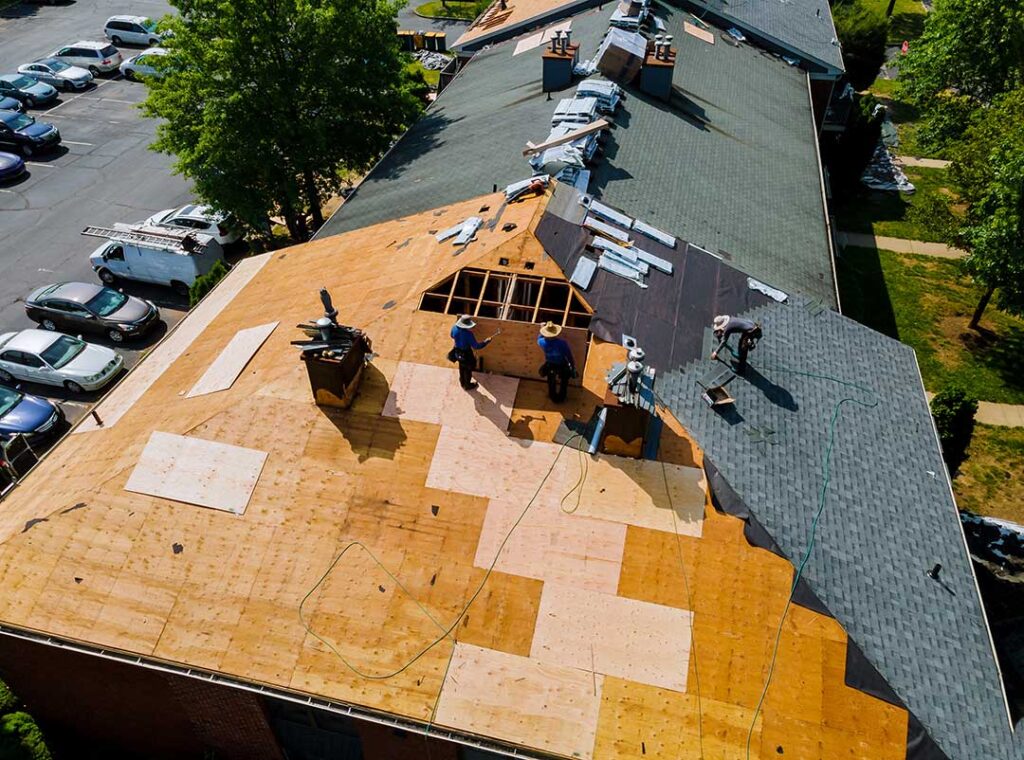
A roof tear-off removes the existing roofing materials down to the roof deck before new roofing is installed. For homeowners in East Amherst, NY, the process can involve noise, debris, weather concerns, hidden wood damage, and temporary changes around the property.
Understanding the sequence helps households prepare realistically and recognize which parts of the work are routine versus signs that additional repairs may be needed.
What exactly happens during a roof tear-off?
A tear-off usually begins with removing shingles, underlayment, flashing, and other roofing layers. The exposed roof deck is then inspected before replacement materials are installed.
The work commonly follows this order:
- Protective coverings are placed over landscaping, siding, windows, doors, and nearby surfaces.
- Roofing crews remove the old shingles and underlayment, often working from the roof edges upward.
- Loose materials are lowered or carried to a designated debris area.
- The roof deck is swept and examined for soft, damaged, or improperly supported sections.
- Necessary deck repairs are completed before new underlayment and roofing materials are installed.
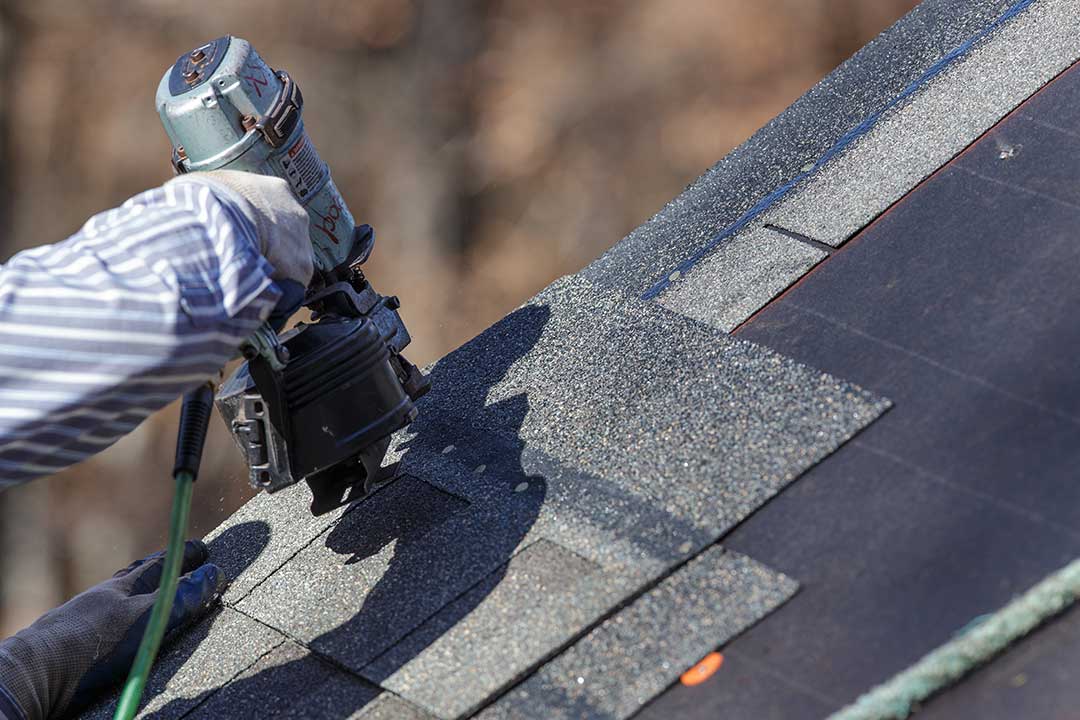
- New roofing, flashing, ventilation components, and edge materials are put in place.
A tear-off is more extensive than installing a new layer over the old roof. It takes longer and creates more debris, but it allows the roof deck and underlying components to be evaluated directly.
How long does a roof tear-off take?
Many residential tear-offs can be completed in one working day, while larger or more complicated roofs may take several days. The schedule depends on roof size, pitch, number of layers, access to the property, crew size, and weather.
Weather is a particularly important factor in this region. Rain can interrupt removal and installation, while strong wind can make exposed roofing unsafe to work on. Snow, ice, and freezing temperatures can also affect material handling and surface conditions during colder months.
A roofing project may therefore begin on one day and pause if the roof cannot be safely protected before changing conditions arrive. A short delay is generally preferable to leaving a roof exposed during unsuitable weather.
What should residents expect around the house?
The most noticeable effects are noise, vibration, falling debris, and changes to normal access around the home. Tear-off work can sound surprisingly loud because old shingles are pried loose, materials are moved across the roof, and debris is placed into containers or piles.
Residents may want to plan for:
- Keeping windows closed during active removal.
- Moving fragile wall decorations away from exterior walls.
- Bringing patio furniture, toys, and small garden items away from the work area.
- Parking vehicles away from the house if possible.
- Keeping pets indoors or in a secure area.
- Explaining the work to children who may be startled by the noise.
- Avoiding areas beneath roof edges while materials are being removed.
Protective coverings reduce the chance of property damage, but they do not eliminate every risk. Small pieces of roofing material can travel beyond the immediate work zone, especially in windy conditions.
Why might additional roof-deck repairs be needed?
Old roofing can hide damage that is not visible from the ground. Once the materials are removed, the roof deck may show staining, softness, splitting, holes, or areas weakened by long-term moisture.
Common causes include:
- Leaks around flashing, valleys, chimneys, skylights, or roof penetrations.
- Ice-related water backup along roof edges.
- Repeated wetting and drying over many seasons.
- Improper attic ventilation that allows excess moisture to accumulate.
- Old repairs that trapped water rather than directing it away.
- Damage from fallen branches or prolonged exposure.
Not every discolored board requires replacement. A sound inspection distinguishes surface staining from structural weakness. Sections that are soft underfoot, delaminated, or unable to hold fasteners may need to be replaced so the new roofing system has a stable base.
Homeowners should expect the possibility of concealed repairs, but the need for added work should be explained with specific locations and reasons.
How does East Amherst weather affect the process?
The local climate creates several conditions that can influence both tear-off timing and roof performance. Heavy snow, freeze-thaw cycles, wind, rain, and summer heat all place different stresses on roofing materials.
Freeze-thaw cycles are especially relevant because water can enter small openings, freeze, expand, and gradually widen weak points. Ice buildup near roof edges may also contribute to water backing up beneath shingles when attic insulation, ventilation, or drainage conditions are not functioning properly.
During a tear-off, it is useful to ask how the roof will be protected if work pauses overnight. A temporary covering should be secured carefully, with attention to wind and water runoff. Temporary protection is not intended to serve as a permanent roof, so installation should continue as conditions safely allow.
What happens to the old roofing materials?
Removed shingles and underlayment are collected and transported for disposal or recycling where appropriate. The volume can be substantial because a roof covering may weigh several tons, particularly when multiple layers are present.
Debris management should include protection for:
- Foundation plantings and shrubs.
- Gutters and downspouts.
- Driveways and walkways.
- Exterior air-conditioning equipment.
- Fences, decks, and lower roof sections.
A final ground inspection is necessary because nails and small fragments can remain after the main cleanup. Magnetic tools may help collect loose fasteners, but residents should still use caution when walking around the property after the workday.
Can a roof be torn off in winter?
A winter tear-off is possible in some situations, but cold weather can make the work slower and more sensitive to conditions. Snow and ice must be cleared safely, and roofing materials may not behave the same way at low temperatures as they do in milder weather.
Cold conditions can affect shingle flexibility, sealant activation, worker footing, and the ability to keep the roof dry during removal. A brief period of suitable weather may be adequate for a smaller project, while an extended forecast of snow, rain, or high wind may create unacceptable exposure risk.
The key concern is not simply whether a tear-off can begin. It is whether each stage—from removal through temporary protection and final installation—can be completed safely and with adequate weather protection.
What signs suggest a tear-off is being handled properly?
A well-managed project usually includes clear preparation, controlled removal, and careful inspection rather than rushing directly from old shingles to new ones.
Useful signs include:
- Ground protection is installed before materials are removed.
- Workers use designated access and debris-handling areas.
- The exposed roof is not left uncovered without a plan.
- Roof-deck problems are documented and explained.
- Flashing, ventilation, and edge details are inspected rather than automatically reused.
- Cleanup includes the ground, walkways, gutters, and landscaping.
- The property is checked for loose nails and debris before the work area is released.
A tear-off is disruptive, but the disruption should be organized. Homeowners should know what areas are restricted, how weather delays will be handled, and what conditions could change the scope of the work.
What should homeowners do before the work begins?
Preparation reduces inconvenience and protects household belongings. Remove delicate outdoor items, trim or secure loose decorations, and identify any gates or access points that need to remain available.
Inside the home, small vibrations may cause dust or debris to shift from attic spaces. Covering stored items and avoiding unnecessary attic access during removal can help. If anyone in the household works from home, attends online classes, or has a noise-sensitive condition, planning around the loudest portion of the tear-off may be worthwhile.
The most useful expectation is that a tear-off is an inspection opportunity as well as a demolition step. Once the old roof is removed, the condition of the deck, flashing, ventilation, and moisture-prone areas becomes much clearer. That information helps determine what must be corrected before the next roof covering is installed.
