
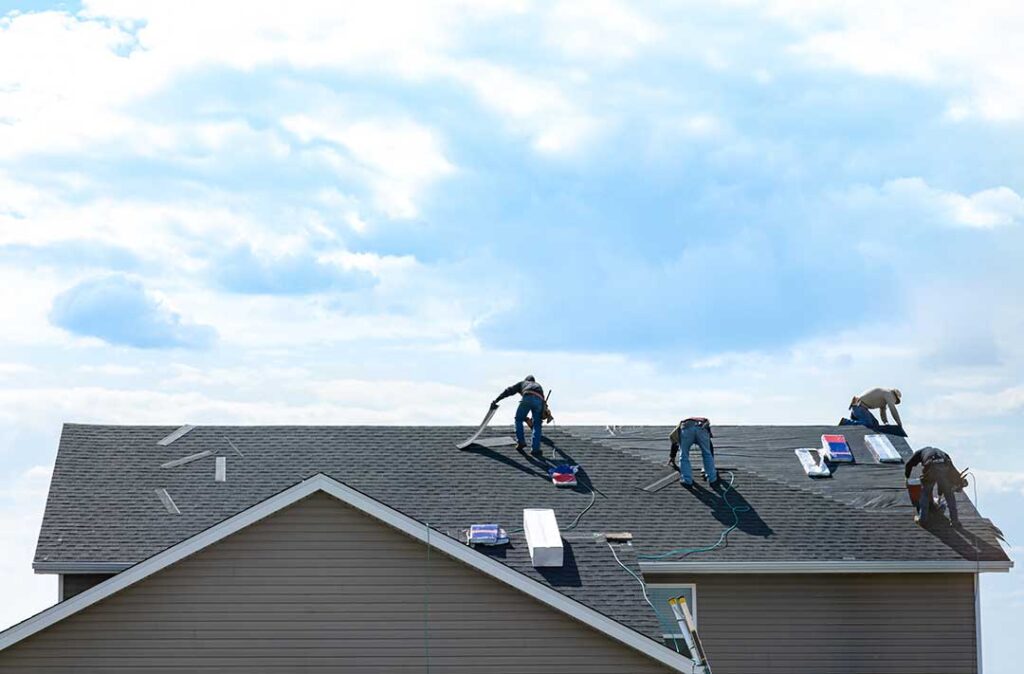
Is it safe to walk on a roof?
Walking on a roof is only reasonably safe when the surface is dry, the roof has a low slope, and proper fall protection is in place. Even then, many roofs can be damaged by foot traffic, and a small mistake can cause a serious fall.
Roof walking should be avoided whenever there is snow, ice, frost, rain, strong wind, loose debris, or poor visibility. In East Amherst, NY, seasonal moisture and winter weather can make roof surfaces slippery even when they appear passable from the ground.
Before climbing, consider whether the task truly requires being on the roof. Many inspections can begin from the ground using binoculars, a camera with zoom, or views from an attic. Gutters, flashing, shingles, and roof edges can often be checked without stepping onto the roof.
Which roofs are safer to walk on?
Low-slope roofs with a firm, walkable surface are generally easier to navigate than steep residential roofs. Roofs with a slope greater than about 6:12 become increasingly difficult to cross safely without specialized equipment. A 6:12 roof rises six inches for every twelve inches of horizontal distance.
The roof material also matters:
- Asphalt shingles: Can be walked on carefully, but granules may loosen and shingles can crack, especially when they are old, brittle, cold, or hot.
- Wood shingles or shakes: May be slippery, split under pressure, or conceal decay.
- Metal roofing: Often becomes extremely slippery with moisture, frost, or condensation. Standing-seam panels may also be damaged by improper foot placement.
- Tile or slate: Can break under concentrated weight and should not be treated as a normal walking surface.
- Low-slope membrane roofing: May tolerate limited foot traffic, but seams, edges, penetrations, and protective coverings can still be damaged.
A roof that looks solid from below may have weakened decking, hidden rot, or areas damaged by previous leaks. Never assume that a smooth or recently repaired surface can support unrestricted foot traffic.
What should be checked before climbing?
A safe roof inspection begins before the ladder is placed. Walk around the property and look for conditions that could make access unsafe.
Check for:
- Wet leaves, moss, algae, frost, or ice
- Snow near the roof edge or on the roof surface
- Wind strong enough to affect balance or move a ladder
- Sagging roof sections or visibly damaged decking
- Overhead electrical lines
- Unstable ground, soft soil, snow, or uneven pavement
- Nearby tree branches that may interfere with ladder placement
- Loose gutters, downspouts, trim, or roofing materials
Ladders should rest on firm, level ground and be positioned according to the manufacturer’s instructions. The top should extend above the roof edge far enough to provide a stable handhold during the transition. Do not place a ladder on ice, packed snow, boxes, makeshift platforms, or wet grass without a suitable stable base.
A second person should remain nearby to help stabilize the ladder and summon assistance if something goes wrong. The person on the roof should avoid carrying bulky tools while climbing. Use a secured tool belt or raise tools only after reaching a stable position.
How should someone move across shingles?
The safest movement is slow, deliberate, and limited to areas known to be structurally sound. Keep the body facing the roof slope and maintain three points of contact whenever possible: two feet and one hand, or two hands and one foot.
On asphalt shingles, place feet near the lower portion of the exposed shingle rather than directly on the raised edge. Avoid stepping on ridges, valleys, flashing, skylights, vents, gutters, and roof edges. These areas may be less stable or more easily damaged.
Do not jump across sections, run, slide, or turn quickly. Short, careful steps reduce the chance of losing balance and reduce stress on the roofing materials. When changing direction, pivot slowly instead of twisting the body while standing on one foot.
Never step on a surface that appears bowed, soft, stained, or separated. A dark area may indicate moisture damage, and a sagging section can signal weakened decking below the shingles.
What safety equipment is needed?
Proper footwear should have clean, slip-resistant soles and provide good ankle support. Shoes with worn soles, muddy tread, or smooth casual footwear are poor choices. Before stepping onto the roof, remove mud, snow, and debris from the soles.
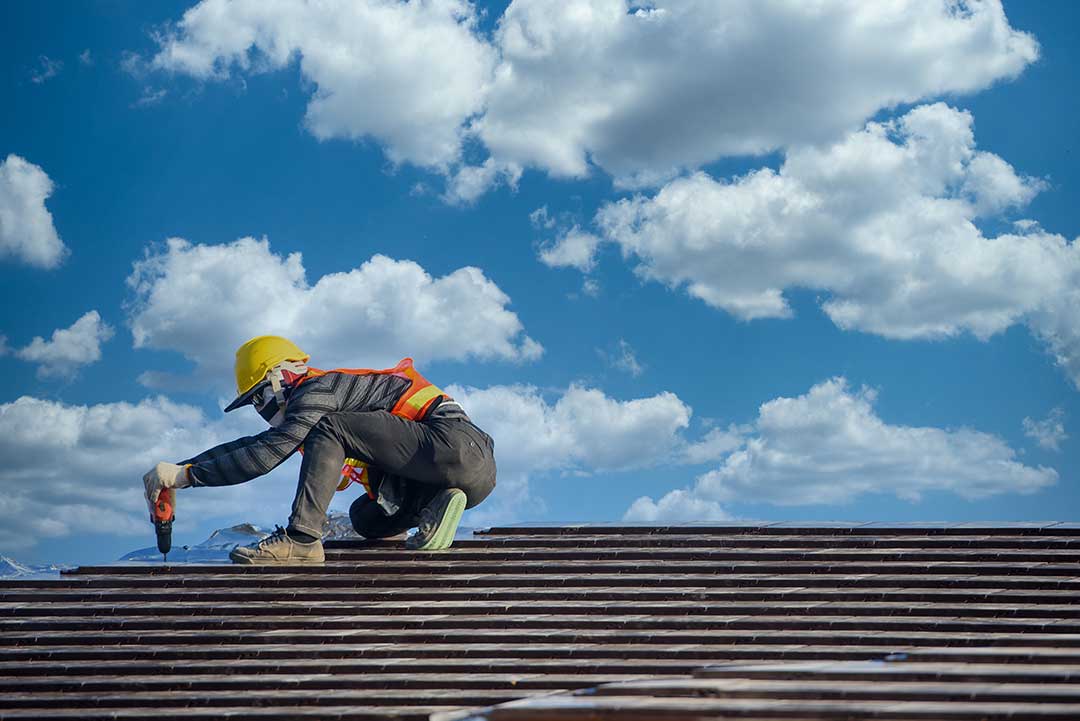
Fall protection is necessary when a slip could result in a serious fall. Depending on the roof, this may include a properly installed roof anchor, a full-body harness, a lifeline, guardrails, or roof brackets. These systems must be compatible with one another and installed according to their instructions. A harness alone does not stop a fall unless it is connected to an appropriately rated anchorage system.
Do not tie a rope to a chimney, plumbing vent, gutter, tree branch, or another object that has not been designed for fall protection. Improvised systems can fail or create additional hazards.
A hard hat may be useful when working below other people or around loose materials, but it does not prevent a roof fall. Eye protection, gloves, and weather-appropriate clothing can also help with specific tasks.
When should roof walking be avoided completely?
Do not walk on a roof in these conditions:
- Snow, ice, frost, or freezing rain is present
- The roof is wet from rain, dew, or condensation
- Wind makes it difficult to stand or control a ladder
- Visibility is poor because of darkness, fog, or heavy precipitation
- The roof has a steep slope and no properly installed fall protection
- The structure shows sagging, severe leaks, fire damage, or major storm damage
- You are carrying heavy equipment or cannot maintain three points of contact
- You feel dizzy, fatigued, unsteady, or uncomfortable with the height
After a winter storm, snow can hide roof edges, damaged shingles, vents, and weak areas. Removing snow from a roof while standing on the surface can also create falling-object hazards and may overload sections of the structure if snow is moved unevenly.
Can walking on a roof cause damage?
Yes. Foot traffic can shorten the life of roofing materials, particularly when shingles are cold and brittle, overheated and soft, or already weakened by age. Repeated steps can loosen granules, break seals, crack surfaces, deform flashing, and damage exposed membranes.
Damage is not always visible immediately. A small crack or displaced shingle may allow water to enter later, especially during the freeze-thaw cycles common in the region. For that reason, roof access should be limited to necessary inspections or maintenance rather than used as a routine shortcut.
If a roof must be crossed, stay on designated walkable areas, avoid unnecessary trips, and inspect the surface afterward for displaced materials or visible damage.
What are safer alternatives to climbing?
Many common checks can be completed from the ground or from inside the building. Use binoculars to examine ridge lines, shingles, flashing, and roof penetrations. From the attic, look for daylight, damp insulation, water stains, mold-like growth, or darkened wood around roof penetrations.
Gutters can often be viewed from the ground, but leaning ladders against gutters can bend them or pull them away from the fascia. A roof rake designed for ground-level use may help with limited snow removal, but it should not be used in a way that places a person beneath unstable snow or ice.
If the roof is steep, damaged, icy, structurally questionable, or difficult to access safely, staying off it is the safest decision. Serious falls can occur during a task that takes only a few minutes, and roof damage may be less costly to address than an avoidable injury.
